ラベル Startups の投稿を表示しています。 すべての投稿を表示

2022年2月9日水曜日

VC firms started to look their own figure through the ESG/sustainability mirror

Several well-known Venture Capital firms have recently started publishing their sustainability reports. 

In a previous article, I wrote that the characteristics and strengths of companies can be identified by reading sustainability reports and analyzing sustainability data. This is even more true for VC firms. For VCs, there is no standardization for ESG/sustainability data disclosure, so they decide for themselves what data to disclose and design the sustainability report more freely than companies whose shares are publicly traded.


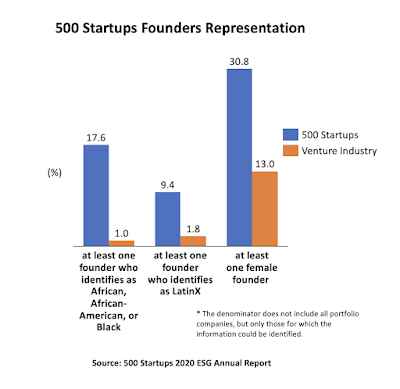
I recently read a sustainability report from 500 Startups. Since they have accelerator programs in several countries and invest in startups globally, they proudly report on the diversity of their portfolio company founders. According to the ESG report, 30.8% of their portfolio companies have at least one female founder (the industry average is 13%), 17.6% of portfolio companies have at least one Black/African/African-American founder (the industry average is 1.0%).
Another impressive sustainability report I read was from Energy Impact Partners.


The report comprises 73 pages and contains a large amount of detailed data on the portfolio companies. Not only aggregated figures are disclosed, but also the raw data of the individual portfolio companies. One of the data that I found interesting was the turnover rates (the average total turnover rates of the portfolio companies was 23%) - by looking details of the turnover rates, I could see the impact of COVID-19 on the startups. 


What stands out from others is that Energy Impact Partners also discloses their own organization's carbon footprint and diversity metrics. I think that's very progressive. According to the report, the percentage of female employees at EIP is 37%.
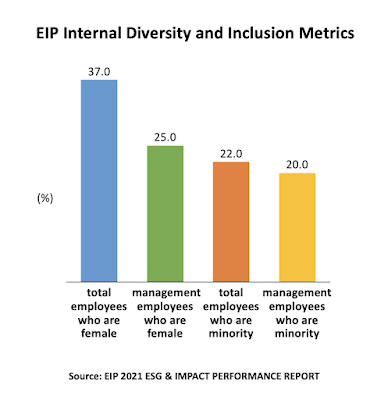


There is often criticism that the VC industry lacks diversity (lack of gender, racial diversity etc.). With the publication of sustainability reports, VC firms have started to look not only at the sustainability and impact of their portfolio companies, but also at their own sustainability, and I think that's a great thing for the industry as well.

2020年7月24日金曜日

COVID19の影響で活用が進むデリバリーロボット

グーグルの本社があるマウンテンビュー市。シリコンバレーの中心とも言えるマウンテンビュー市のダウンタウンでは、以前からロボットや変わった乗り物をよく見かけますが、最近は特に、デリバリーロボットの活用が進んています。

コロナウイルスによるShelter-in-placeが始まって少し経った4月中旬頃から、マウンテンビューダウンタウン付近では、自動運転によるデリバリーロボットが複数台稼働している状況が普通に見られるようになりました。初めこそ珍しくて、写真やビデオを撮っている人が多くいたものの、今はもう住人は見慣れてしまい、ロボットがいる光景はごく普通のことなっています。


試しにアプリをダウンロードしてチェックしてみたところ、約3ドルの宅配費用に加え、商品には通常価格の20%くらいが上乗せされていました。宅配サービスの大手スタートアップ、Instacartと同じ手法です。購入金額の20パーセント増しになることを考えるとそれほど安くはないですが、歩行や荷物の運搬が困難な高齢者の方には、便利なオプションと言えるでしょう。ちなみに、このロボットは話すこともできます。「Hi! I'm Starship, delivery robot!と挨拶して来たことがありました。また、父の日には「Happy Fathers Day!」と話すキャンペーンを行なっていました。

また、宅配ロボットとは別に、自動運転(あるいは自動運転を見越した遠隔操作?)で動いている無人スクーターも4台ほど見かけました。COVID19の影響で外出する人が少なくなっているうちに、様々なロボットの試験や実用化が進みそうです。

2017年9月1日金曜日

Japanese utilities are actively seeking innovative startups

The retail electricity market was deregulated in Japan in April 2016. Since then, a lot of activities have taken place in the Japanese market.
Prior to deregulation, 10 regional utilities were the sole electricity providers for their areas. But as of Sep 11th 2017, 1013 companies have registered as electricity providers.
According to the Ministry of Economy, Trade and Industry, Tokyo Electric Power Company (TEPCO) lost more than 1.6 million electric customers and Kansai Electric lost more than 600,000 electric customers as of March 2017.  
Under these circumstances, Japanese utilities started to seek new business opportunities. As a part of these efforts, they started to seek innovative startups to collaborate or invest in.
TEPCO is ahead of the field. They formed an internal venture capital arm and have already invested in several companies. In 2016, TEPCO invested in United Wind, a small-scale wind turbine startup, and Via Science, an AI based software company. In 2017, TEPCO also invested in energy storage company Moixa and Conjoule, which developed peer-to-peer energy trading platforms using blockchain.
TEPCO also formed an accelerator called Free Electrons with other 7 utilities. This April, Free Electrons selected 12 energy related startups to support out of 450 applicants. TEPCO also recently held an electricity load forecasting technology contest, which welcomed participation by startups.
Other utilities are also following TEPCO. This April, Chubu Electric announced a collaboration with a Silicon Valley based energy management startup, Bidgely. Osaka Gas opened an office in the Plug & Play Tech Center in Silicon Valley and is looking for opportunities to collaborate with Silicon Valley and other US-based startups. Tokyo Gas and Kyushu Electric formed their own accelerator programs by collaborating with a startup called Creww, an open innovation platform provider in Japan.

Japanese utilities are very active recently and thinking about new business models seriously. It is a sign that the electricity market deregulation started to change the utility mindset. In the future, new technologies may thrive in Japan as the Japanese electricity system transforms.